Cruelty Draws Crowds
- Jun 5, 2023
- 5 min read
It’s rightly said that humans protect what they love but what they don’t love they try finding ways to destroy it. Humans have forgotten that they are a component of nature and not it’s controller. We need to learn to coexist with our surroundings and not change them according to our will. Snakes are one of the animals that most of the humans try to destroy with no specific reason. We don’t understand that they are unique among themselves and play a vital role in the ecosystem. They are not here for our self- centered needs and entertainment, they are here for a greater cause.
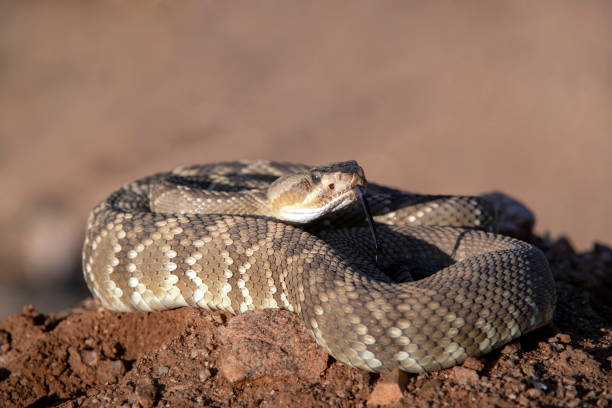
The Western Diamondback Rattlesnake (Crotalus atrox) is a magnificent eye-capturing snake. By nature they are very shy and gentle and share a social bonding among others of their kind. They will never try to kill us without any reason. They are smart animals and they know that they cannot eat us and biting us will be a waste of their precious venom which can be used to catch a prey instead of wasting it on us. It takes a lot of energy to create venom in their body and without food it is not possible and therefore they need to utilize their venom very cautiously. They only wish to be left alone and it’s not them invading human settlements it’s us who are doing it. So are they vicious animals or us? Are they cruel or us?
The Rattlesnake Roundup is an event celebrating animal cruelty in parts of the US. The largest Rattlesnake Roundup is celebrated in Sweetwater, Texas. The event here started in 1958 to ease ranchers’ fears about the Western Diamondback Rattlesnake endangering livestock, workers and their families. Every year 20,000 to 30,000 people visit Rattlesnake Roundup at Sweetwater, Texas. The main reason for organizing roundups is said to curb the rattlesnake population, for entertainment, “education”, snake skin and meat. There are no rattlesnake farms in Texas and therefore Rattlesnake Roundups are the greatest supply of snake meat. Today the human population is increasing at a far more alarming rate than any other organism on this planet but will we do the same thing to curb our population?
The Rattlesnake Roundup has also proven to be an economic engine for the local economy. According to a 2015 economic impact analysis conducted for the town by an outside consultant, the Rattlesnake Roundup generates $8.4 million in economic activity in Sweetwater every year. That’s a big number for a town of 11,000 where about 25 percent of people live below the poverty line. While there are other economic drivers in the area including manufacturing, railroads, and four of the 11 largest wind farms in the world, the Rattlesnake Roundup holds a special place in the town’s identity.

Every year hundreds of Western Diamondback Rattlesnakes are abducted from the wild. They are forced to come out of their burrows by gassing. Gassing is a process where the hunters release liquid or fumes of gasoline within the burrows which forces the snakes to come out and thus fall into the vicious trap of human beings. Again here, we don’t realize that not only gassing is an inhumane way to capture any animal but it also has severe impacts on our environment. On land, spilled gasoline can rapidly penetrate soil potentially causing groundwater or surface water contamination. Below the surface, gasoline can persist in soil or sediment for a longer period of time. Gasoline trapped in sediment may cause harm to worms, insects and shellfish that live in or feed off the sediment. Its not only cruel but also impassive to separate anyone from his or her family. Rattlesnakes have social bonding among themselves.
Snakes look different and express emotions differently but according to us they are nothing more than cold-blooded killing machines and a significant reason of having such an attitude towards snakes in general are movies and television shows who portray them as evil and vicious-revenge seeking animals.
Weeks before the Rattlesnake Roundup they are captured and kept in circumscribed spaces with no food, water or light. Melissa Amarello, an animal rights activist and co-founder of the Advocates for Snake Preservation in Tucson, Arizona, said that many of the rattlesnakes gathered during the event are often bloody and swollen because of how they were handled by participants.

On the day of the roundup they are measured, weighed, milked and then thrown in a pit. Hundreds of them are thrown on top of each other. One by one their heads are kept on a wooden plank where a bolt gun is used on their head and then they are decapitated using a machete. You could hear all of them rattling and it does not mean that they are warning you to stay away, here it shows their screams filled with pain, agony and bewilderment. The place is filled with a vomit-like filthy smell with blood drops on the floor. Their skin is then used to make various products along with their bones and their flesh is sent to the frier to be sold for consumption. For a small fee, children can try their hands at stripping snake skins and add their bloody handprints to the event’s mural. Some snakes may have their mouths sewn shut so that they can be manhandled by the public and used as photo props and they call this to be an educational event. One of the most popular and absolutely horrifying events is called the Miss Snake Charmer pageant, where young beauty queens decapitate the helpless snakes.
By slaughtering snakes every year people feel that it would keep them away from their houses but in reality it attracts more rattlesnakes to the human settlements. Due to gassing, the burrows become inhabitable for a long period of time, this makes the remaining rattlesnakes to move towards the human settlements in search of food and shelter. This leads to an increase in human-snake conflict which usually ends up with the cessation of the snake. “Removing many tons of helpful predators from nature annually is unscientific, unjustified and unsustainable.” said Clifford Warwick, Consultant Biologist and Medical Scientist.
We need to understand that this isn’t the way to approach things. We need to find sustainable ways focusing on conservation and preservation of these eye-capturing snakes. Inspite of slaughtering them, we need to teach people that what they should do when we they see a snake? Whom should they call? And if it bites anyone then what they need to do?
Slaughtering snakes today emboldens our younger generation to continue to do this tomorrow. Making small children put their handprints on the wall with blood is not education at all. It entirely depends on us how we want our younger generation to interact with wildlife and know more about them. Would you want your children to learn about an animal when its slaughtered mercilessly or when it’s living happily in its surroundings? It is on us to decide that what will be our heritage to the next generation.


Comments